

Who This Work Is For
After Surgery
You may be exploring paramedical tattooing after surgery, including C-sections, mastectomy, reconstructive procedures, or other surgical outcomes where scarring has altered the appearance or feel of your skin.
Changes to Skin Texture
This work is also for those living with acne scarring, burn scars, grafted skin, or texture changes that are difficult to address through traditional cosmetic or medical treatments alone.
Scar Softening & Balance
Some clients come to this work after stretch marks, injury, or skin trauma, looking for a way to soften contrast, restore balance, or reduce the visual presence of scars over time.
A Measured Approach
Paramedical tattooing is often sought by people who value privacy, patience, and careful evaluation, and who want to understand what is realistically possible before making decisions.


Paramedical Tattooing as Art at Legend Ink
At Legend Ink, paramedical tattooing is not treated as a corrective procedure. It is treated as a form of illustration—one that uses color, composition, and visual storytelling to transform areas of the body shaped by surgery, trauma, or healing. We approach this work the same way we approach fine art tattooing: through drawing, design, and an understanding of how imagery lives on the body. Every line, color shift, and compositional decision is made with intention, guided by anatomy, movement, and the way skin carries image over time.
Scars are not avoided or disguised at the edges. They are fully integrated into the artwork itself. The design is built to encompass the affected area completely, allowing the art to absorb the scar and redirect the eye through form, color, and flow. This is where restoration and illustration meet. The result is not medical camouflage, but artwork that belongs naturally to the body—created to feel intentional, balanced, and alive.


Tummy Tuck Scar
A lower abdominal surgical scar was fully integrated into a custom illustrative composition. The artwork was designed to encompass the entire scar field, using color, flow, and scale to redirect focus and restore visual balance across the body.


Nipple Reconstruction
This case involved gender-affirming chest reconstruction following breast removal surgery. While the initial surgical outcome included nipple placement the client did not identify with, paramedical tattooing was used to redefine size, tone, and positioning to better align with male chest anatomy.


Scar Integration
Scar tissue with uneven tone and texture was addressed through a custom illustrative design rather than pigment correction alone. The artwork fully encompasses the affected area, using flow, color, and composition to redirect the eye and restore balance as the skin heals and ages.


Organic Scar Integration
Irregular scarring and skin texture were addressed through a custom floral composition designed to follow the natural shape of the affected area. The artwork mirrors the contours and spacing of the skin, allowing pigment, color, and form to integrate rather than compete with the surface beneath.
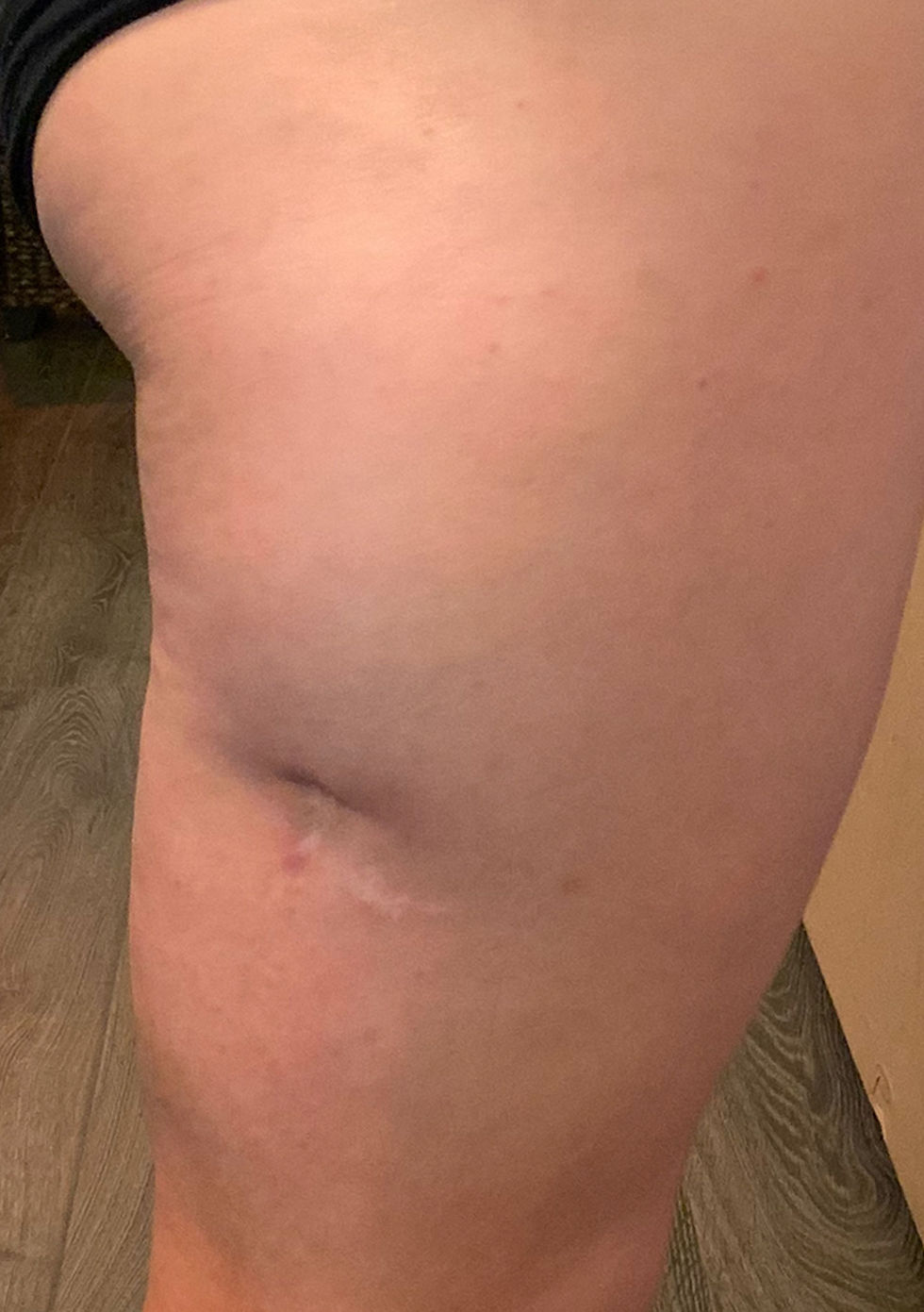

Deep Tissue Loss
Following a traumatic injury that resulted in significant tissue loss, this piece required the creation of visual depth where none remained. Color theory, contrast control, and dimensional illusion were used to collapse the appearance of a deep scar site, redirecting the eye and restoring continuity across the leg.


Skin Grafts
This work disguises the edges and specific odd textures of skin graft surgeries underneath shifting color and texture. Replacing the scars with entirely with artwork.


Oil Burn Sar
Coverage
In this project we not only handled the artistic representation required to cover the oil burns, but also the specific requirements to adjust the design to best make them disappear for good.


Areola Reconstruction
This work restores the visual presence of the areola following mastectomy and reconstruction. Pigment layering, color modulation, and anatomical placement are used to create dimensional realism that integrates naturally with the body rather than sitting on top of it.
Areas of Paramedical Focus
Surgical Scars
Scars from procedures such as C-sections, mastectomy, reconstructive surgery, and other medical interventions can vary widely in texture, tone, and healing behavior. Each requires individual evaluation.
3D Areola & Breast Reconstruction
Paramedical tattooing can play a role in restoring the appearance of the areola following mastectomy or reconstructive surgery, with careful attention to anatomy, symmetry, and long-term realism.
Burn Scars & Grafted Skin
Burns and grafted areas present unique challenges due to altered skin structure and sensitivity. Work in these areas focuses on integration and balance rather than coverage alone.
Acne Scarring & Skin Texture
Acne scarring and uneven skin texture can be visually softened through careful pigment placement, helping reduce contrast without attempting to erase natural skin variation.
Stretch Marks & Skin Trauma
Stretch marks and trauma-related changes often require subtle approaches that respect skin movement, aging, and tone shifts over time.
Custom Restorative Projects
Some clients don’t fit neatly into categories. In these cases, restorative tattooing is approached as a custom project, guided by anatomy, healing, and personal goals.
How Paramedical Tattooing Is Different
Paramedical tattooing differs from traditional tattooing because the skin itself has been altered. Scar tissue, grafted skin, and reconstructed areas respond differently to pigment, pressure, and time.
Work on compromised skin requires an understanding of anatomy, healing timelines, and how the body moves and ages. Color, depth, and placement must be approached differently than on healthy skin.
In many cases, the goal is not to “cover” a scar, but to reduce contrast, restore balance, and help the area integrate more naturally over time.
This approach prioritizes evaluation before action. Not every scar is ready to be tattooed, and sometimes the most responsible recommendation is to wait.
This work is informed by long-term study of the human form, including anatomy, figure drawing, and the way skin behaves beneath the surface. The focus is not on decoration, but on thoughtful intervention.
Tattooing As Medicine
Skin Grafts
Gina's story offers an inside look at how rewarding covering skin grafts and severe burns can be using the latest ParaMedical advancements in tattooing. Get the full story.

3D Nipples
Reconstructing Nipples over surgical scars is known as 3D Nipple Tattooing. This is a very complex problem to solve in most cases. Get an in depth look at the art of nipple tattooing.

Acne Scars
We take a unique approach to solving scar issues on the body. In this case of Acne Scars we actually utilized the scars in the final artwork as the emotions escape to god.

The Consultation Process
Paramedical tattooing begins with evaluation, not treatment. Every body heals differently, and not every scar is ready—or appropriate—for tattooing. The consultation exists to understand your skin, your history, and what is realistically possible before any decisions are made.
Initial Review & Medical History
Each consultation starts with a review of your surgical or treatment history, healing timeline, and current skin condition. Scar age, tissue type, sensitivity, and prior interventions all influence how skin will respond to pigment over time.
This step helps establish whether paramedical tattooing is appropriate now, later, or not at all.
Skin Assessment & Feasibility
Scar tissue behaves differently than healthy skin. During evaluation, we assess texture, elasticity, vascularity, and how the area responds to pressure and movement. These factors determine pigment approach, depth, and long-term stability.
In some cases, the most responsible recommendation is to wait.
Design Strategy & Expectations
When appropriate, we discuss design strategy, pigment placement, and realistic outcomes. The goal is not perfection or concealment, but balance—work that integrates with your body and continues to settle naturally as the skin ages.
Clear expectations are established before any work begins.
Timing, Sessions & Healing
Paramedical tattooing often requires multiple sessions spaced over time. Healing response, pigment retention, and skin adaptation guide the pace of the work. This process cannot be rushed without compromising results.
Patience is part of the treatment.
A consultation does not obligate you to proceed.
It exists to help you make an informed, confident decision.


.jpeg)


.jpeg)
.jpeg)


Healing, Sessions & What to Expect
Paramedical tattooing is a process, not a single appointment. Healing response, pigment retention, and skin behavior all influence how the work progresses over time. Understanding this timeline is essential to setting realistic expectations.
Immediately After Treatment
Following a session, the treated area may appear darker or more pronounced than the final result. Mild redness, swelling, or sensitivity is normal, particularly in areas of scar tissue or reconstructed skin. These early visual changes are part of the healing process and do not reflect the settled outcome.
The Healing Phase
As the skin heals, pigment softens and integrates gradually. Scar tissue often responds more slowly than healthy skin, and color may shift subtly as the area stabilizes. This phase can take several weeks and varies from person to person. Patience during healing is critical to achieving balanced, natural-looking results.
Multiple Sessions & Refinement
Paramedical tattooing frequently requires more than one session. Follow-up work allows for adjustment based on how the skin retained pigment and how the area healed. This measured approach reduces risk and improves long-term stability. Sessions are spaced intentionally to respect the body’s healing cycle.
Long-Term Results
The goal of paramedical tattooing is not to create a fixed or artificial appearance, but to achieve visual integration that continues to age naturally with your body. Over time, subtle changes in tone and texture are expected and accounted for in the design strategy. This work prioritizes longevity over immediacy.
Healing timelines vary. Results depend on skin type, scar maturity, and individual response.
.jpeg)
Training, Anatomy & Approach
Paramedical tattooing requires more than technical skill. It demands an understanding of how the human body is built, how skin heals, and how tissue changes over time. This work is informed by long-term study of anatomy, observation, and experience working directly on compromised skin.
Anatomical Foundation
Paramedical tattooing requires more than technical skill. It demands an understanding of how the human body is built, how skin heals, and how tissue changes over time. This work is informed by long-term study of anatomy, observation, and experience working directly on compromised skin.
Understanding Skin Behavior
Scar tissue, grafted skin, and reconstructed areas do not behave like healthy skin. Differences in elasticity, vascularity, and sensitivity require adjustments in pressure, depth, and pigment strategy. Experience working on these skin types informs when to proceed, how to proceed, and when not to.
Measured, Long-Term Thinking
Paramedical tattooing is not decorative problem-solving. It is a form of visual intervention that must respect healing timelines, biological limits, and the reality of aging skin. Every recommendation is made with long-term outcomes in mind, not immediate visual impact.
Privacy & Studio Environment
Paramedical tattooing often involves deeply personal areas of the body and experiences connected to surgery, illness, or recovery. The environment in which this work takes place matters.
Our San Francisco studio operates by appointment only and is structured to support discretion, focus, and respect for personal boundaries. While more than one client may be scheduled in the studio at a time, paramedical work is conducted with privacy screens and careful spatial separation.
When a session requires greater exposure or full privacy, scheduling is adjusted so that the studio is reserved for a single client. These needs are discussed in advance and accommodated accordingly.
Sessions are unhurried and structured around your comfort. Privacy, communication, and consent are treated as part of the process, not afterthoughts.
This environment exists to support thoughtful decision-making, careful execution, and a sense of control throughout the experience.
Privacy is not a luxury here. It is part of the care.
